



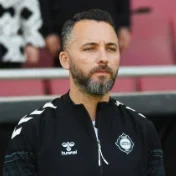
At the centre of my coaching philosophy there is zero ego and one hundred percent organisation.
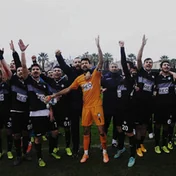
I believe that nobody in a team, the head coach included, should stand in front of the game or the organisation. For me a strong team is not the team of whoever talks the most, holds the most authority or has the brightest players. A strong team is one where everyone knows their role, completes each other and moves within the same footballing mind.
On that foundation I build a hybrid playing and working system. I do not tie myself to one formation, one game model or a set of unchangeable truths. Player profiles, the opponent's behaviour, the flow of the match, the score, physical condition and the problems the game itself throws up all shape our decisions. The formation can change; the team's core principles do not.
For me, organisation is not about turning players into machines. It is the opposite: giving the player a framework in which they can make the right decision.
Be organised, read the game, and never become mechanical.
I want a player to understand not only what to do but why. When a player makes a mistake, the first thing I look at is not the mistake itself. Why did he take that decision? What did he see, what could he not see, and what solution did the team offer him? Without understanding that, I do not think telling a player “you got it wrong” is enough.
That is why I do not treat training, video, analysis and individual feedback as separate jobs. They are all parts of the same process.
In opposition analysis my aim is not to describe the opponent at length either. For me the real question is:
“Given how the opponent behaves, which strategy from our playing repertoire should we choose?”
Analysis exists to change the decision, not to collect information.
Data, video, live observation and technology are not the decision itself. They are tools that raise the quality of the decision. I do not set intuition and technology against each other. Sometimes the data backs my instinct; sometimes it shows me something else. At that point, what matters to me is understanding why they disagree before asking which one is right.
That is why my working model is built on this cycle:
Observation → Data → Video → Interpretation → Decision → Feedback
The same logic applies to recruitment. The good player and the right player are not always the same person. I do not look only at a player's individual quality. I try to understand how well he fits our game, the demands of the role, his teammates and what the organisation needs.
On leadership, I do not believe the head coach has to be the person who knows everything. You have to listen to what the analyst, the fitness coach, the medical staff, the scout, the coaching staff and the player see. The head coach makes the final call, but that call should not come out of one person's head alone.
That is why, inside a staff, expertise, open communication, trust and responsibility matter far more to me than ego.
In football no plan works perfectly. There is a red card, a player gets injured, you concede early, the squad gets thin, the scoreboard starts to press, and sometimes the scenario you prepared falls apart completely. I believe a team's real level shows not only while the plan is working, but in the decisions it makes when the plan breaks.
So I summarise my approach to coaching like this:
Zero ego. One hundred percent organisation. Strong principles, flexible solutions and better decisions in every moment of the game.
And the purpose of the hybrid system I build is actually very simple:
Not to lock the player inside a system, but to keep developing the system together with the player, around what the player and the game need.
